
Hui author Li Jinxiang (李进祥), born in the 1960s, recently introduced Ningxia writers of fiction and poetry in an article entitled 纯净朴诚的宁夏少数民族文学. I haven’t read most of these authors and hope to write about them in detail in the future, but for now, I’ll just cite some authors and works for reference. Major Ningxia-based writers since … Continue reading Backgrounder: Modern Ningxia Writers
Category: Altaic Peoples & Tales (阿尔泰各民族及其故事)
“Daur Epic Narratives”: New Approach Aims to Capture Original Daur Flavor
A few years ago, oral epics of non-Han peoples in China — if ever published — tended to be presented in Chinese (translation). To the uninitiated, this implied that these tales existed just in Chinese. More recently, bilingual versions have occasionally appeared, i.e., with the original language printed in IPA or a script familiar only … Continue reading “Daur Epic Narratives”: New Approach Aims to Capture Original Daur Flavor
Inner Mongolia: Tardy Legal Move to Protect Oroqen Culture it Once Suppressed
Inner Mongolia has just passed a law aimed at protecting the culture of the Elunchun (鄂伦春), also known as the Oroqen, according to an item republished at Chinawriter.com.cn (鄂伦春传统文化). Like the Evenki portrayed in Chi Zijian’s Last Quarter of the Moon, the Oroqen speak a Tungusic tongue, and their population has markedly declined since the … Continue reading Inner Mongolia: Tardy Legal Move to Protect Oroqen Culture it Once Suppressed
3 New Books Document Manchu-Tungusic Languages, Feature Multilingual Glossaries
A conference was recently held in Beijing by China Social Sciences Press to celebrate the publication earlier this year of three scholarly works of interest to researchers of Manchu-Tungus languages (研讨会). They are all authored by Dulor Osor Chog (aka Chao Ke, 朝克) an Evenki who holds a Ph D. in Japanese Culture and Language … Continue reading 3 New Books Document Manchu-Tungusic Languages, Feature Multilingual Glossaries
July 2014: Update on Uyghur Writers and Writing as Crackdown Gains Momentum
In the wake of two high-profile and deadly attacks reportedly carried out by Uyghurs outside of their traditional homeland, the Chinese authorities have launched a multi-faceted campaign to crush what they see as a terrorist movement that aims at founding an independent state in the Xinjiang autonomous region covering one-sixth of Chinese territory. I am … Continue reading July 2014: Update on Uyghur Writers and Writing as Crackdown Gains Momentum
Manchu Novelists: Storytellers First, and Partial to the Spoken Language
A conference on the unique contribution of Manchu novelists was held in Beijing on June 6, 2014, to celebrate the publication of 满族小说与中华文化 (Manchu novels and Chinese culture). The book is the result of a project sponsored by the Chinese Academy of Social Sciences Fund (社科基金项目). Editor Guan Jixin (关纪新), a Manchu himself, conceded that … Continue reading Manchu Novelists: Storytellers First, and Partial to the Spoken Language
Book Review: Wang Lixiong’s “My Western Realm, Your Eastern Homeland” (我的西域,你的东土)
Book Review: 我的西域,你的东土 (1) 王力雄著 My Western Realm, Your Eastern Homeland By Wang Lixiong Reviewed by Bruce Humes (2014) The 2009 Ürümqi riots damaged the reputation of Xinjiang’s Uyghur in the eyes of many Chinese, but the “2014 Kunming Attack” in March this year has surely left a more blood-curdling and indelible image of the “Uyghur-as-Terrorist” … Continue reading Book Review: Wang Lixiong’s “My Western Realm, Your Eastern Homeland” (我的西域,你的东土)
“The Mysterious Realm of Lop Nur” and “Curse of Kanas Lake”: Xinjiang’s Answer to Tibetan Fiction Fever?
The phenomenal success of He Ma’s The Tibet Code (《藏地密码》, 何马著)—reportedly over 3m volumes sold—has spawned a host of thrillers and mysteries driven by a similar fascination with Tibetan history, religion and relics. The popular 3-volume Tibetan Mastiff (藏獒) by Yang Zhijun (杨治军), now an animated film co-produced by a Sino-Japanese partnership, is just one example. … Continue reading “The Mysterious Realm of Lop Nur” and “Curse of Kanas Lake”: Xinjiang’s Answer to Tibetan Fiction Fever?
“Duobukuer River”: Daur Writer Paints Brighter Future of One Who Left the Greater Khingan Range Behind
Ever since I completed my translation of Han author Chi Zijian’s Last Quarter of the Moon, set in the Greater Khingan Range (大兴安岭) that divides the Manchurian plain of northeastern China from the Mongolian Plateau of Inner Mongolia, I’ve been wondering: How would one of the indigenous nomadic peoples, an Evenki, Oroqen or Daur for … Continue reading “Duobukuer River”: Daur Writer Paints Brighter Future of One Who Left the Greater Khingan Range Behind
Çin Edebiyatından Kültür Devrimine Ergen Gözüyle Bakış: Wang Gang’ın İngilizce Romanı
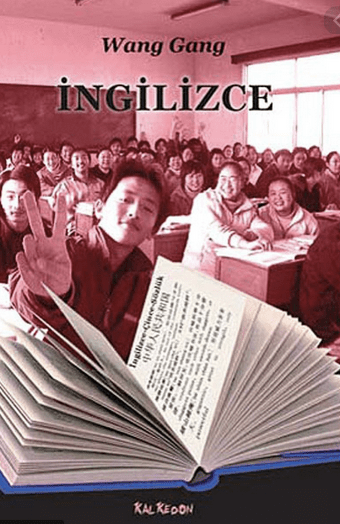
Ayşe Ünal Ersönmez (for English version, click here) Çin edebiyatının son birkaç yılda hem kendi ülkesinde hem de dünyada en ilgi görmüş örneklerinden Wang Gang’ın İngilizce adlı romanı, 2013 yılında Kalkedon Yayınları tarafından Nil Demir çevirisiyle Türkçe’ye kazandırıldı. Roman, Çin’in kuzeybatısındaki Sincan Uygur Özerk Bölgesinde yaşayan Çinli genç “Aşk Liu”nun delikanlılık dönemini konu alıyor. Aşk … Continue reading Çin Edebiyatından Kültür Devrimine Ergen Gözüyle Bakış: Wang Gang’ın İngilizce Romanı
 Ethnic ChinaLit