
I was recently approached with a kind offer to take part in a huge project: Translation into English of the Kyrgyz Epic of Manas that comprises over 200,000 lines of verse. The team, I was assured, would include native speakers of Kyrgyz and Chinese; my role would simply be to polish the English text.
I have done quite a bit of reading about the epic, am a published translator of literature and Central Asian history from the Chinese, have a decent grasp of basic Turkish, and am learning Kyrgyz at the moment.
My answer: an emphatic “No.”
Why so?
In a word, the world deserves a translation of this epic based on the Kyrgyz original, not on a Chinese rendition of it.
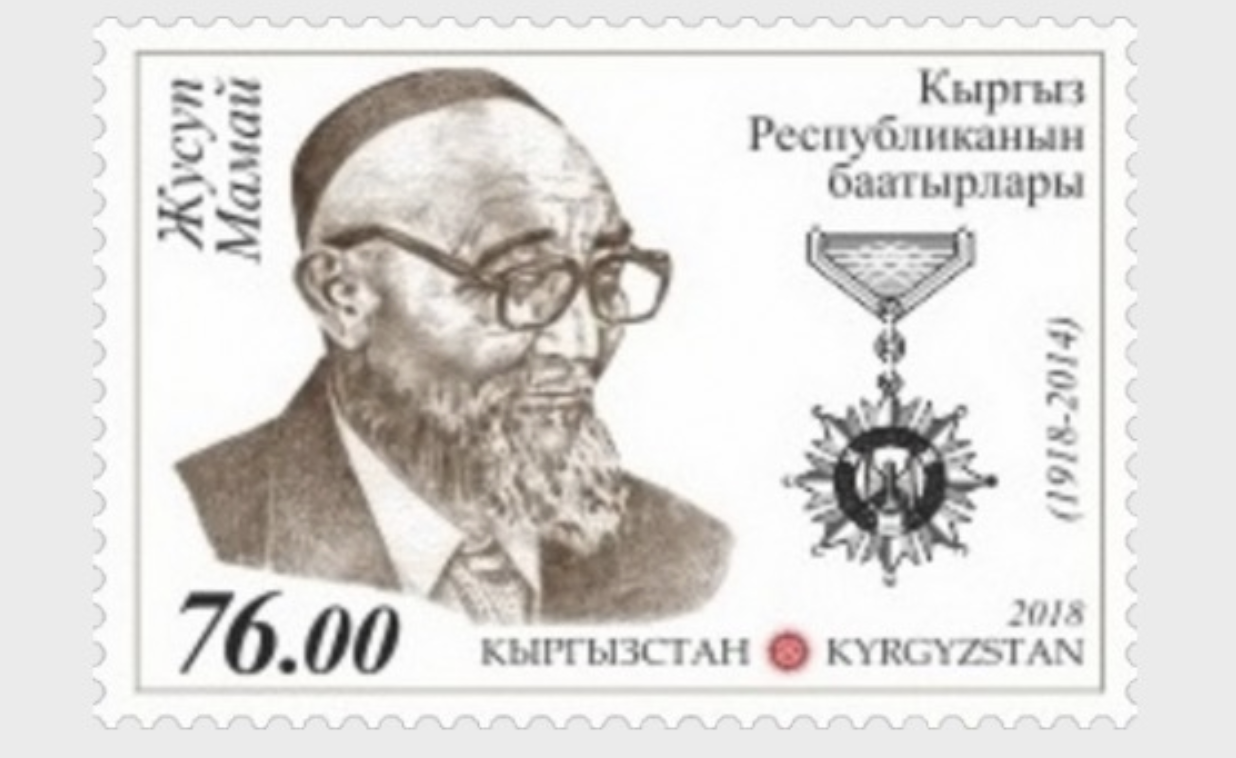
As noted in my essay, Jusup Mamay, Manaschi: A Rehabilitated Rightist and his Turkic Epic, at various times since 1949, the Chinese authorities have gone to great lengths to persecute the storytellers (manasqi) themselves, and during the heat of the Cultural Revolution, mysteriously “disappeared” the entire Kyrgyz manuscript that had been painstakingly written down as Mamay recited it. At the time, because of his dedication to telling the tale to all who would listen, Mamay had been categorized as a “rightist” and was doing manual labor during the day.
Eventually, a translation of the entire epic was published in Chinese.
Based on my reading of related developments, it appears that in the 21st century, the Chinese authorities still see this epic as highly sensitive, and seek to position it as a heroic saga highlighting the bravery and military exploits of one of China’s longtime constituent ethnicities, rather than the story of the founding of the Kyrgyz and their independent nation.
At one point several years ago, a body in China commissioned Professor Karl Reichl, a German Turkologist, to translate the original into English (and German). He tells me that he completed the first three of eight sections, but as I understand it from other sources, after they were published in China in bilingual format, the project ended abruptly and those volumes are now out of print.
This doesn’t surprise me, because all signs indicate that the Chinese cultural bureaucracy intends to appropriate this Kyrgyz epic – like the Tibetan King of Gesar and Mongolian Jangar – into its version of a harmonious, multi-ethnic China. Emphasis on China.
Following this thinking, it follows that the global – i.e., English – versions of these three great epics should be based on the Chinese, even though all three were created in indigenous tongues other than Chinese, by a people who were not under Chinese rule.
But it should not be forgotten that the Chinese-language versions are not just “translations,” they are modern, textualized and curated versions of oral epics. Anthropologist Mark Bender, who has done in-depth research into Miao and Nuosu creation epics, and worked on their translation, notes the tendency for compilers in China to strive for what they term a “complete” (完整), official version that involves “negotiations” and even deletion of “taboo” content:
Although the appreciation of multiple versions gathered in specific performance contexts has a growing place in folklore circles in China, there is still a strong tradition of creating “complete” versions of a given song cycle or story tradition that will serve as part of an ethnic group’s official tradition of oral literature. These versions usually combine several versions collected from a number of singers.
In some cases the participating singers and eldersmay be involved with editors in the negotiations concerning the makeup of the final master version. In theory, such master texts—which might be best described as “collective versions”— are intended to reflect and preserve the richness and completeness of the tradition in a format that can be read and appreciated to its fullest by present or future generations without access to multiple live versions. In the past, much more so than is usual now, this stage of editing also allowed for selection or omission of content deemed crude, backward, divisive, or otherwise taboo.
I’d assume this sort of tweaking also took place when Mamay’s version was translated into Chinese, because in both China and the Soviet Union, the authorities considered the Epic of Manas as a potentially dangerous call to separatism and/or Pan-Turkism.
Further reading: 居素普玛玛依评传; Jusup Mamay, Master Performer of the Kirghiz Manas Epic; Turkic Oral Epic Poetry; Manasqi: The Singer of the Kirghiz Epic Manas; 中国史诗;The Epic of Manas: A Multilingual Guide to Related Links.
*** If you’d like to view comments or leave one of your own, please scroll down. It may not appear immediately, as my system requires that I “approve” it. If you’d like your name to appear, add at the end, otherwise it will likely be labeled “anonymous.” Critical comments are welcome; just keep it polite.


the world deserves a translation of this epic based on the Kyrgyz original, not on a Chinese rendition of it. can’t agree more
LikeLiked by 1 person
It’s widely recognised in Translation Studies that translation via a third language is not the same as translating from the original, especially since Chinese is so typologically different from Turkic languages. Why is it that the Chinese authorities do not understand this? Is it due to hubris (the belief that a translation from Chinese is just as good as, if not better than, a translation from the original language), or is it from a desire to own and control? It is really unwise of the Chinese authorities to take this attitude. It only makes them look bad to everyone concerned (the academic community, overseas readers), confirms suspicions of outsiders of the Chinese government’s policies, and provides further ammunition for critics of China. Only China’s political masters and their apparatchiks could imagine that this is a good decision and not realise that it leaves egg on the face of China. An exemplary case of the ideology of political control breeding mediocrity.
LikeLike
It may not be fair to blame the government . . . in this instance. I believe this is a project s/he proposed for funding and publication, and not one the government specifically commissioned.
However, I did convey to this scholar the same concerns I outlined in my post.
Given that the cultural authorities — earlier in the Soviet Union, but later too in the PRC — were long determined to ensure that this Kyrgyz national epic should not serve to awaken or nourish any sort of separatist or pan-Turkist phenomenon, I do wonder what sort of editing might have occurred as the text passed from spoken (sung) Kyrgyz, and then from Kyrgyz text to Chinese text. Inevitably, certain concepts and terms were favored over others, some even deleted, and this would naturally impact the Chinese-to-English translation process.
When the full English version based on the Kyrgyz sees the light — be it Reichl’s or anyone else’s — it will be fascinating to then compare how the Kyrgyz-to-Chinese and Kyrgyz-to-English versions deal with a host of iconic Kyrgyz terms.
LikeLike
Every word you’ve written resounds with truth.
LikeLike
You’re probably right; it’s likely the decision was made by lower-level cultural authorities. Which is even worse since they should know better. It’s not just a matter of vocabulary. Kyrgyz and Chinese are very different typologically. Turkic languages use more complex syntactic structures (including converbs, relative clauses, etc.) while Chinese tends to prefer parataxis. How will it read when translated into English? Of course the translators will adapt the content to English style, but will it really reflect the original Kyrgyz style?
LikeLike
Another instructive case study on the power of (a) language and the language of power.
LikeLike