
I wrote this novel because I wanted to tell the story of a people whose voice is not heard, whose language is not recognized, whose story is not known, who is despised and degraded,” 土耳其籍库尔德作家 Yavuz Ekinci 写道。 他的愤怒是有根据的。80 年代以来,为了对付东南边武装分裂库尔德工人党(PKK)的游击战,土耳其中央政府曾动用了200,000 军队,也宣布了戒严,同时进行了镇压库尔德文化的政策,例禁止用库尔德语授课、出书、播放节目等。 最近几年,所谓 “库尔德问题” 有了一些进展,而且双方今年正在进行和平商谈。也许 《The Lost Lands of Paradise》 (原文:Cennetin Kayıp Toprakları) 得以出版跟这个缓和有关。 故事由三个部分组成:第一部分是从土耳其东南边的库尔德小村子的小孩的角度叙述的;第二部分由他还在世的祖母讲;最后的部分是用第三人称描绘祖母死后,尸体送回家乡埋葬的事。当中孙子和他父亲发现,原来她不是库尔德人,而是有亚美尼亚血统。 这是土耳其共和国社会建立 … Continue reading “Lost Lands of Paradise”: 库尔德村子的故事
Ethnic Literature in China: A Primer for the Uninitiated
A while back I came upon what seems to be a fairly comprehensive look at novels by non-Han writers published since 1949 that deal directly with issues of culture and identity. Entitled Ethnic Minority Novels (少数民族小说), the Chinese-language article is unfortunately not signed, but it appears to have been written by a scholar and published … Continue reading Ethnic Literature in China: A Primer for the Uninitiated
Chinese Muslim’s Pilgrimage to al-Andalus
Zhang Chengzhi (张承志), the white-hot Red Guard who mastered Mongolian and Japanese—and then converted to Islam—has written En las Ruinas de la Flor: Viajes por al-Andalus (鲜花的废墟). His Chinese-language travelogue takes us through Moorish Spain, Portugal and Morocco in search of the golden age of Islam in Europe (8th-15th centuries). Freshly Flowering Ruins: Travels in al-Andalus … Continue reading Chinese Muslim’s Pilgrimage to al-Andalus
“The Creation Story”: An Excerpt from “Canticle to the Land,” the Third Novel in Fan Wen’s Yunnan-Tibet Trilogy
The Story of Creation Long, long ago Sky and earth not yet distinct Water and soil not yet formed Darkness shrouding all. No sun, ho! No moon, Neither flower nor beast, ho! And no love. No Tashi Gyatso, Tibetan minstrel, For his wings of passion had yet to unfurl. --- Tashi Gyatso’s Creation Ballad The … Continue reading “The Creation Story”: An Excerpt from “Canticle to the Land,” the Third Novel in Fan Wen’s Yunnan-Tibet Trilogy
Minority Language Big Dictionary Project: Linguistic Reference Tools, Encyclopedias or Vaporware?
As of early May 2014, China has published its first Wa-Mandarin dictionary, according to a report by China Nationalities Newspaper republished at Chinawriter.cn (佤汉大辞典问世). According to Wikipedia, the Wa (佤族) reside mainly in Burma (800,000), China’s Yunnan (400,000) and Thailand (10,000). Like many of the peoples in China’s border areas, they had no widely used … Continue reading Minority Language Big Dictionary Project: Linguistic Reference Tools, Encyclopedias or Vaporware?
Book Review: Wang Lixiong’s “My Western Realm, Your Eastern Homeland” (我的西域,你的东土)
Book Review: 我的西域,你的东土 (1) 王力雄著 My Western Realm, Your Eastern Homeland By Wang Lixiong Reviewed by Bruce Humes (2014) The 2009 Ürümqi riots damaged the reputation of Xinjiang’s Uyghur in the eyes of many Chinese, but the “2014 Kunming Attack” in March this year has surely left a more blood-curdling and indelible image of the “Uyghur-as-Terrorist” … Continue reading Book Review: Wang Lixiong’s “My Western Realm, Your Eastern Homeland” (我的西域,你的东土)
“The Mysterious Realm of Lop Nur” and “Curse of Kanas Lake”: Xinjiang’s Answer to Tibetan Fiction Fever?
The phenomenal success of He Ma’s The Tibet Code (《藏地密码》, 何马著)—reportedly over 3m volumes sold—has spawned a host of thrillers and mysteries driven by a similar fascination with Tibetan history, religion and relics. The popular 3-volume Tibetan Mastiff (藏獒) by Yang Zhijun (杨治军), now an animated film co-produced by a Sino-Japanese partnership, is just one example. … Continue reading “The Mysterious Realm of Lop Nur” and “Curse of Kanas Lake”: Xinjiang’s Answer to Tibetan Fiction Fever?
“Duobukuer River”: Daur Writer Paints Brighter Future of One Who Left the Greater Khingan Range Behind
Ever since I completed my translation of Han author Chi Zijian’s Last Quarter of the Moon, set in the Greater Khingan Range (大兴安岭) that divides the Manchurian plain of northeastern China from the Mongolian Plateau of Inner Mongolia, I’ve been wondering: How would one of the indigenous nomadic peoples, an Evenki, Oroqen or Daur for … Continue reading “Duobukuer River”: Daur Writer Paints Brighter Future of One Who Left the Greater Khingan Range Behind
Çin Edebiyatından Kültür Devrimine Ergen Gözüyle Bakış: Wang Gang’ın İngilizce Romanı
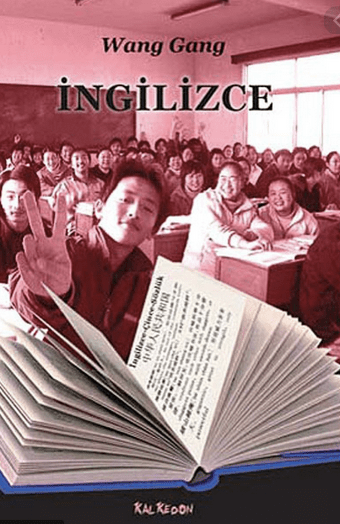
Ayşe Ünal Ersönmez (for English version, click here) Çin edebiyatının son birkaç yılda hem kendi ülkesinde hem de dünyada en ilgi görmüş örneklerinden Wang Gang’ın İngilizce adlı romanı, 2013 yılında Kalkedon Yayınları tarafından Nil Demir çevirisiyle Türkçe’ye kazandırıldı. Roman, Çin’in kuzeybatısındaki Sincan Uygur Özerk Bölgesinde yaşayan Çinli genç “Aşk Liu”nun delikanlılık dönemini konu alıyor. Aşk … Continue reading Çin Edebiyatından Kültür Devrimine Ergen Gözüyle Bakış: Wang Gang’ın İngilizce Romanı
A Resounding “Yes” to Mother-tongue Literature — but for Whom and about What?
Liu Daxian (刘大先, pictured here) has just published a persuasive call to recognize the great value of “mother-tongue literature” (多民族母语文学) to Chinese literature (中国文学) as a whole. Liu is a member of the editorial staff at the quarterly Studies of Ethnic Literature (民族文学研究) who did a stint in 2009 as a visiting scholar at Columbia U in … Continue reading A Resounding “Yes” to Mother-tongue Literature — but for Whom and about What?
 Altaic Storytelling