
Zhang Chengzhi (张承志), the white-hot Red Guard who mastered Mongolian and Japanese—and then converted to Islam—has written En las Ruinas de la Flor: Viajes por al-Andalus (鲜花的废墟). His Chinese-language travelogue takes us through Moorish Spain, Portugal and Morocco in search of the golden age of Islam in Europe (8th-15th centuries). Freshly Flowering Ruins: Travels in al-Andalus … Continue reading Chinese Muslim’s Pilgrimage to al-Andalus
Author: xumushi
Chinese-to-English literary translator. Interested in topics such as fiction by the non-Han peoples of China, storytelling by Altaic peoples, and Silk Road cultures.
“The Creation Story”: An Excerpt from “Canticle to the Land,” the Third Novel in Fan Wen’s Yunnan-Tibet Trilogy
The Story of Creation Long, long ago Sky and earth not yet distinct Water and soil not yet formed Darkness shrouding all. No sun, ho! No moon, Neither flower nor beast, ho! And no love. No Tashi Gyatso, Tibetan minstrel, For his wings of passion had yet to unfurl. --- Tashi Gyatso’s Creation Ballad The … Continue reading “The Creation Story”: An Excerpt from “Canticle to the Land,” the Third Novel in Fan Wen’s Yunnan-Tibet Trilogy
Minority Language Big Dictionary Project: Linguistic Reference Tools, Encyclopedias or Vaporware?
As of early May 2014, China has published its first Wa-Mandarin dictionary, according to a report by China Nationalities Newspaper republished at Chinawriter.cn (佤汉大辞典问世). According to Wikipedia, the Wa (佤族) reside mainly in Burma (800,000), China’s Yunnan (400,000) and Thailand (10,000). Like many of the peoples in China’s border areas, they had no widely used … Continue reading Minority Language Big Dictionary Project: Linguistic Reference Tools, Encyclopedias or Vaporware?
Book Review: Wang Lixiong’s “My Western Realm, Your Eastern Homeland” (我的西域,你的东土)
Book Review: 我的西域,你的东土 (1) 王力雄著 My Western Realm, Your Eastern Homeland By Wang Lixiong Reviewed by Bruce Humes (2014) The 2009 Ürümqi riots damaged the reputation of Xinjiang’s Uyghur in the eyes of many Chinese, but the “2014 Kunming Attack” in March this year has surely left a more blood-curdling and indelible image of the “Uyghur-as-Terrorist” … Continue reading Book Review: Wang Lixiong’s “My Western Realm, Your Eastern Homeland” (我的西域,你的东土)
“The Mysterious Realm of Lop Nur” and “Curse of Kanas Lake”: Xinjiang’s Answer to Tibetan Fiction Fever?
The phenomenal success of He Ma’s The Tibet Code (《藏地密码》, 何马著)—reportedly over 3m volumes sold—has spawned a host of thrillers and mysteries driven by a similar fascination with Tibetan history, religion and relics. The popular 3-volume Tibetan Mastiff (藏獒) by Yang Zhijun (杨治军), now an animated film co-produced by a Sino-Japanese partnership, is just one example. … Continue reading “The Mysterious Realm of Lop Nur” and “Curse of Kanas Lake”: Xinjiang’s Answer to Tibetan Fiction Fever?
“Duobukuer River”: Daur Writer Paints Brighter Future of One Who Left the Greater Khingan Range Behind
Ever since I completed my translation of Han author Chi Zijian’s Last Quarter of the Moon, set in the Greater Khingan Range (大兴安岭) that divides the Manchurian plain of northeastern China from the Mongolian Plateau of Inner Mongolia, I’ve been wondering: How would one of the indigenous nomadic peoples, an Evenki, Oroqen or Daur for … Continue reading “Duobukuer River”: Daur Writer Paints Brighter Future of One Who Left the Greater Khingan Range Behind
Çin Edebiyatından Kültür Devrimine Ergen Gözüyle Bakış: Wang Gang’ın İngilizce Romanı
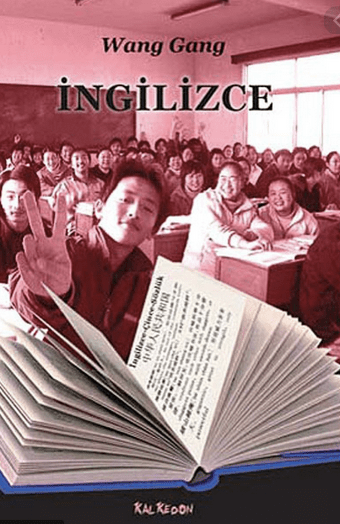
Ayşe Ünal Ersönmez (for English version, click here) Çin edebiyatının son birkaç yılda hem kendi ülkesinde hem de dünyada en ilgi görmüş örneklerinden Wang Gang’ın İngilizce adlı romanı, 2013 yılında Kalkedon Yayınları tarafından Nil Demir çevirisiyle Türkçe’ye kazandırıldı. Roman, Çin’in kuzeybatısındaki Sincan Uygur Özerk Bölgesinde yaşayan Çinli genç “Aşk Liu”nun delikanlılık dönemini konu alıyor. Aşk … Continue reading Çin Edebiyatından Kültür Devrimine Ergen Gözüyle Bakış: Wang Gang’ın İngilizce Romanı
A Resounding “Yes” to Mother-tongue Literature — but for Whom and about What?
Liu Daxian (刘大先, pictured here) has just published a persuasive call to recognize the great value of “mother-tongue literature” (多民族母语文学) to Chinese literature (中国文学) as a whole. Liu is a member of the editorial staff at the quarterly Studies of Ethnic Literature (民族文学研究) who did a stint in 2009 as a visiting scholar at Columbia U in … Continue reading A Resounding “Yes” to Mother-tongue Literature — but for Whom and about What?
Shortage of Mongolian-to-Mandarin Literary Translators
In the wake of the recent announcement of the winners of the Duorina Mongolian Literature Prize, Ye Erda (叶尔达), professor of Mongolian language and literature at Beijing’s Central Nationalities University, notes that the current crop of talented Mongolian-to-Mandarin literary translators still far from meets growing demand. Salhinhee (哈森) took home the top award for her … Continue reading Shortage of Mongolian-to-Mandarin Literary Translators
Teaching of Minority Languages in China a Touchy Subject
There is a sizable population of Tibetans in truly multi-ethnic Yunnan, and I was keen to take advantage of this and learn a bit of Tibetan alongside my studies of classical Chinese in Kunming back in 2012. The head of my private language school had difficulties finding a teacher, however, because he utterly refused to … Continue reading Teaching of Minority Languages in China a Touchy Subject
 Ethnic ChinaLit