“Funeral of a Muslim” (穆斯林的葬礼): Tale of Three Generations of a 20th Century Hui Family

With sales of several million copies, Funeral of a Muslim, Huo Da’s tale about three generations of a Hui family in Beijing, is quite possibly the most popular ethnic-themed novel ever published in China. It spans the turbulent years of the Japanese invasion, World War II and part of the Cultural Revolution. If the novel is … Continue reading “Funeral of a Muslim” (穆斯林的葬礼): Tale of Three Generations of a 20th Century Hui Family →

Fang Fang’s Wuhan Diary: Dissed for ‘Washing Dirty Linen’ before Foreign Eyes

家丑不传外 It was bad enough that author Fang Fang (方方) has regularly posted her popular Wuhan Diary (武汉日记) on China’s social media, offering her personal — and not occasionally, critical — comments on the effects of the deadly epidemic during the lockdown, penned at Ground Zero. Reports The Diplomat (Conscience of Wuhan): . . . … Continue reading Fang Fang’s Wuhan Diary: Dissed for ‘Washing Dirty Linen’ before Foreign Eyes →

非漂出版专讯: 2020.4 AfroLit4China Newsbriefs

Recent Interviews with African Novelists (非洲作家最近受访): Petina Gappah, Zimbabwean author of Out of Darkness, Shining Light, about 19th-century explorer David Livingstone: “Livingstone was an absolute gossip and his journals were valuable – he wrote about other people, but also about nature, ants, leaves. The most interesting snippets, I weaved into the story. I learned Swahili … Continue reading 非漂出版专讯: 2020.4 AfroLit4China Newsbriefs →

China’s First 20th-century Epidemic: Brief Excerpts from Reportage and Fiction

For those of you who would like to learn a bit about China’s pre-21st century experience in dealing with epidemics, I’ve woven together three topical items, all of which center around an epidemic that took place in early 1900s China. They include news about the upcoming launch of a French translation of a “plague” novel — 《白雪乌鸦》by … Continue reading China’s First 20th-century Epidemic: Brief Excerpts from Reportage and Fiction →

Interviews with Chinese-to-English Literary Translator Bruce Humes

Podcaster Angus Stewart interviews Bruce Humes about translating Chi Zijian’s Last Quarter of the Moon Arrival of the Han & their lumberjacks * Female Shamans * Magical realism * Gu Tao’s documentaries * Irony of CCP-driven collectivization * Various titles of the novel in translation Chimamanda Adichie is leading the rise of an African literature wave in China (Quartz China) African fiction in Chinese translation  *  Popularity … Continue reading Interviews with Chinese-to-English Literary Translator Bruce Humes →

Xinjiang-based Novel: Excerpt from Patigül’s “Bloodline”

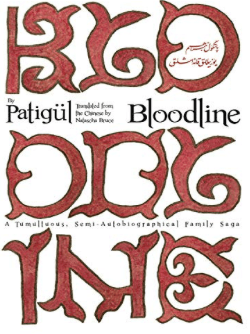
   An excerpt from Bloodline , a novel by Uyghur author Patigül set in Xinjiang (《百年血脉》帕蒂古丽 著) Translated from the Chinese by Natascha Bruce Edited by Bruce Humes   Growing Up In Da’nanpo (大南坡上的日子) We lived southeast of Da’nanpo, deep in the desert and on top of a steep slope, which meant all routes away from … Continue reading Xinjiang-based Novel: Excerpt from Patigül’s “Bloodline” →

Synopsis: “Confessions of a Jade Lord”

My co-translation of Uyghur author Alat Asem’s novel set in Xinjiang has now been published.  Here is a brief synopsis of sorts, taken straight off the book’s back cover: Confessions of a Jade Lord 《时间悄悄的嘴脸》(阿拉提·阿斯木  著) “Tell Eysa that he cannot live by drifting in the wind. He should return and live in his own … Continue reading Synopsis: “Confessions of a Jade Lord” →

The Epic of Manas (玛纳斯史诗): A Multilingual Guide to Related Links

  《玛纳斯史诗》 The Epic of Manas A Multilingual Guide to Related Links   Non-Han Oral Epics 《中国史诗》(Chinese) Comprehensive 591-page study of China’s oral epics by scholars Lang Ying (朗樱) and J. Rincindorji (仁钦道尔吉). Dedicates 40 pages to Manas, including synopsis, Kyrgyz oral storytelling tradition, and manasqi. The Manas Epic The Kyrgyz Epic Manas Selections translated, introduced and … Continue reading The Epic of Manas (玛纳斯史诗): A Multilingual Guide to Related Links →

Backgrounder: Mongolian author Guo Xuebo

February 17, 2019 Author's Bio Although he writes in Chinese, Guo Xuebo (郭雪波) is fiercely proud of his Mongolian heritage and was raised in Inner Mongolia’s Khorchin Grasslands (Hure Banner). Now 71 and bilingual, he spoke Mongolian at home and school until he was 13. He graduated from Beijing’s prestigious Central Academy of Drama (Department … Continue reading Backgrounder: Mongolian author Guo Xuebo →