
My co-translation of Uyghur author Alat Asem’s novel set in Xinjiang has now been published. Here is a brief synopsis of sorts, taken straight off the book’s back cover: Confessions of a Jade Lord 《时间悄悄的嘴脸》(阿拉提·阿斯木 著) “Tell Eysa that he cannot live by drifting in the wind. He should return and live in his own … Continue reading Synopsis: “Confessions of a Jade Lord”
Author: xumushi
Chinese-to-English literary translator. Interested in topics such as fiction by the non-Han peoples of China, storytelling by Altaic peoples, and Silk Road cultures.
The Epic of Manas (玛纳斯史诗): A Multilingual Guide to Related Links
《玛纳斯史诗》 The Epic of Manas A Multilingual Guide to Related Links Non-Han Oral Epics 《中国史诗》(Chinese) Comprehensive 591-page study of China’s oral epics by scholars Lang Ying (朗樱) and J. Rincindorji (仁钦道尔吉). Dedicates 40 pages to Manas, including synopsis, Kyrgyz oral storytelling tradition, and manasqi. The Manas Epic The Kyrgyz Epic Manas Selections translated, introduced and … Continue reading The Epic of Manas (玛纳斯史诗): A Multilingual Guide to Related Links
Backgrounder: Mongolian author Guo Xuebo
February 17, 2019 Author's Bio Although he writes in Chinese, Guo Xuebo (郭雪波) is fiercely proud of his Mongolian heritage and was raised in Inner Mongolia’s Khorchin Grasslands (Hure Banner). Now 71 and bilingual, he spoke Mongolian at home and school until he was 13. He graduated from Beijing’s prestigious Central Academy of Drama (Department … Continue reading Backgrounder: Mongolian author Guo Xuebo
非漂[Fēi Piāo]:非洲文学在中国 — 2018 年终总结
January 25, 2019 By Bruce Humes 非洲文学在中国 — 2018 年终总结 Bruce Humes/文 (徐穆实,非漂 [Fēi Piāo] 博主) 一年时间,大有不同。 2017年,中国大陆渴望体验非洲文学的读者只能看到 8 种新作,全部从英语或法语翻译。作 米亚·科托《梦游之地》,2018 年译成中文的葡语小说之一 近两年,我通过建立“非洲文学:中文译本”(African Writing in Chinese Translation)双语数据库,记录非洲文学引进中国的情况。数据库收录的引进版非洲文学作品,从 1960 年代以来到 2018 年末,总共有 143 种。搜集的大部分是中长篇小说,也有少数短篇小说集、诗集。 2018 年一年的新作品达到13种,也更加多样: 多半译自葡萄牙语或阿拉伯语四名作者来自葡语系国家(安哥拉、莫桑比克),三名来自地中海沿岸国家,其他来自撒哈拉以南非葡语系国家(肯尼亚、尼日利亚、南非)体裁有中长篇、短篇集、戏剧 多样化之外,还有一个好兆头:这些新书大部分是原版(葡语、阿语)直接翻译,不是英译本转译。我还没有向出版商确认,但网上多种信息表明,一部分这些译者有葡语、阿语高等文凭,翻译过几本葡语、阿语书。 中国出版商一直有个不招人待见的坏习惯,引人误会:书脊、版权页上只说了作者国籍,却不一定标明这本书译自什么语言。于是,读东非文学的中国读者完全有理由相信,某本小说的中文版是从斯瓦西里语直接翻的,其实是从英译文转译的。这种 “暧昧” 也许是因为国内某些小语种的译者实在太少,出版商又希望少花钱,缩短上市的时间,就会从英译文转译。 陶菲格·哈基姆《洞中人》,被认为是埃及第一部在出版之后几年有幸上演的剧本 第一次浪潮发生在 1980 年代,受意识形态驱动。国家政策要增进与第三世界、新独立国家的团结,于是外文出版社等国营机构翻译出版了大量非洲作品,如:尼日利亚作家 Wole Soyinka (沃莱·索因卡),肯尼亚小说家 Ngugi wa Thiong’o (恩古吉·瓦·提安哥),塞内加尔诗人(前总统)Léopold Sédar Senghor (列奥波尔德·塞达·桑戈尔),Mouloud Mammeri (阿尔及利亚作家穆鲁德·玛梅利) 等。甚至还给儿童出了非洲民间故事选集。 … Continue reading 非漂[Fēi Piāo]:非洲文学在中国 — 2018 年终总结
African Literature: On China’s Cultural Radar Yet?
Can Literary Imports Change Chinese Perceptions of Africa? : My piece on AfroLit in Chinese is up now at Sixth Tone: Since the founding of the modern Chinese state in 1949, there have been three waves of African literary imports. The first, which emerged in the 1980s, was ideologically driven. Empowered by Beijing’s policy of promoting … Continue reading African Literature: On China’s Cultural Radar Yet?
The New Xinjiang: Traveling when Uyghur
In Navigating Xinjiang's Security Checkpoints, Darren Byler, anthropology PhD candidate at the University of Washington, relates his recent experiences in northwest China: Over the course of a week in cities across Xinjiang, I went through dozens and dozens of checkpoints. I saw young Uighur officers berate elderly Uighurs for not showing their IDs. I saw … Continue reading The New Xinjiang: Traveling when Uyghur
English Excerpt from “Prayers in the Wind” (祭语风中) by Tibetan Author Tsering Norbu
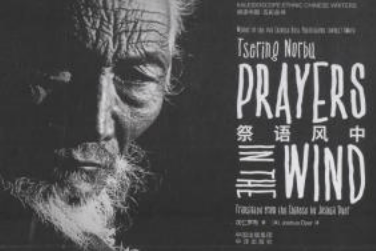
Excerpt from Prayers in the Wind A novel by Tibetan Author Tsering Norbu 节选:《祭语风中》(次仁罗布 著) Translated from the Chinese by Joshua Dyer Edited by Bruce Humes Zhyiö Rinpoche’s body sat upright on a wooden bed wrapped in his frayed and faded robe. Peering through the thick veil of incense smoke, I could almost will myself … Continue reading English Excerpt from “Prayers in the Wind” (祭语风中) by Tibetan Author Tsering Norbu
“Manas” Onstage: Ongoing Moves to Sinicize China’s Three Great Oral Epics
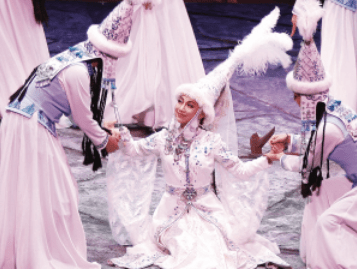
A large-scale, colourful rendition of the Kyrgyz epic Manas (玛纳斯史诗) was staged March 22-23 in Beijing’s ultra-modern Poly Theater. This performance came just two days after the newly anointed President Xi Jinping, speaking at the People’s Congress, cited two of the three great oral epics of non-Han peoples, Manas and the Tibetan-language King Gesar. While … Continue reading “Manas” Onstage: Ongoing Moves to Sinicize China’s Three Great Oral Epics
“The Devils’ Dance”: Review of Uzbek author Hamid Ismailov’s Novel
From childhood, it was drilled into our minds together with our mother tongue: if you start an idea, take it to the finish line ! This is because the Uzbek language’s structure is such that until you get to the end of a verbal phrase, in order not to miss the meaning of the verb, … Continue reading “The Devils’ Dance”: Review of Uzbek author Hamid Ismailov’s Novel
Altaic Storytelling Quote of the Week: Sinification of Our Country’s Islam
. . . the Chinese Islamic Association advocates the following: 1) That education about the Socialist Core Values must enter the mosque; 2) That the outstanding traditional culture of China [中华优秀传统文化] enter the mosque; 3) That the “Lessons on Muslim Patriotism” enter the mosque; 4) That religious rituals, culture, and architecture must embody Chinese characteristics, Chinese styles, … Continue reading Altaic Storytelling Quote of the Week: Sinification of Our Country’s Islam
 Altaic Storytelling