
Dubbed “China’s Thoreau,” Liu Liangcheng has sold well over one million copies of One Man’s Village alone and won top literary awards with subsequent works. “We are living in a time of great change for humanity,” says Liu, “but I am interested in the things that remain unchanged in rural life.” The author began with … Continue reading Author’s bio: Liu Liangcheng (刘亮程)
Abudan’s Mazar
The significance --- and even the definition --- of 麻扎 (mazar) plays an important role in Abudan Village, as portrayed in Liu Liangcheng's novel, The Audible Annals of Abudan (《凿空》刘亮程 著). In its first appearance in the tale, the narrator briefly defines it in brackets: . . .一块棉花地和一片麻扎(墓地)。 Simply put, mazar = cemetery. But that equivalency … Continue reading Abudan’s Mazar
Pic of the Week: Replacing religion with “faith in the state”?
This picture of a China propaganda poster uses the phrase for "have faith" -- 有信仰 -- in a way that I have always associated with religion, i.e., be a believer (in this or that religion). Perhaps I am wrong, but this feels like a new usage of the phrase. Odd for a Party that enforces … Continue reading Pic of the Week: Replacing religion with “faith in the state”?
New Book: Ethnic Branding in Contemporary China
The Buyi people (布依族), largely based in southern Guizhou province but also present in Yunnan, Sichuan, Guangxi and Vietnam, face a dilemma. On the one hand, they work hard to maintain their culture — both out of pride and to attract visitors to their region. On the other, they want to maintain the government and … Continue reading New Book: Ethnic Branding in Contemporary China
The Battle over Politically Correct Designations for China’s Borderlands
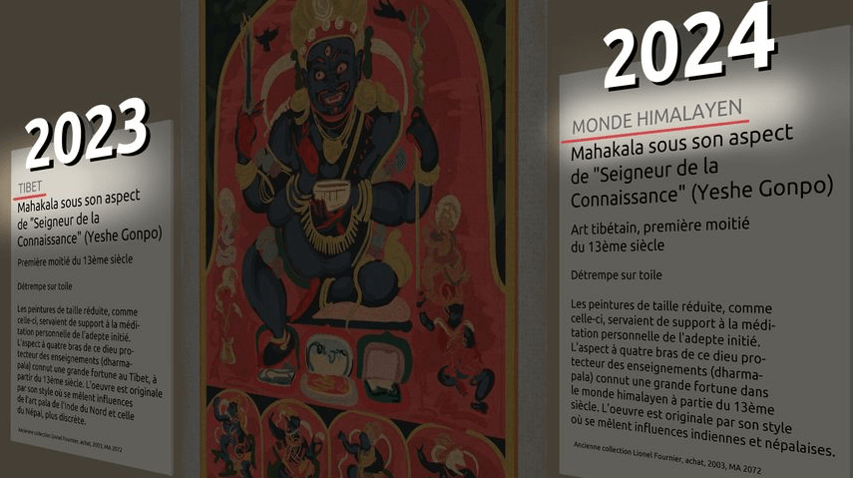
Labels matter. As Confucius (reportedly) said: 名不正,則言不順 言不順,則事不成 If names are not rectified, then words are not appropriate. If words are not appropriate, then deeds are not accomplished. … Continue reading The Battle over Politically Correct Designations for China’s Borderlands
2024 Update: Soft Power Strategy — Where Does China Figure in Turkey’s Literary Translation Program?
Back in 2016, I noted that during 2005-16, Turkey spent US$4.4m to fund translation and publication of fiction by Turkish authors via its TEDA grant program, according to Turkish Books, an article that appeared in the Hürriyet Daily. TEDA's own chart at the time showed that the grant program subsidized the translation and publication of 258 books in … Continue reading 2024 Update: Soft Power Strategy — Where Does China Figure in Turkey’s Literary Translation Program?
China’s ‘Minority’ Fiction: Wells of Nostalgia, Resentment, Strength and Hope
In China’s Minority Fiction, Sabina Knight poses the sensitive question "Should non-Han writers [based in the PRC] be considered Chinese writers?" and provides an overview of their writing in post-1949 China. She concludes: Minority fiction reveals long-buried wells of nostalgia, resentment, strength, and hope. Celebrated for adding multicultural threads to the Chinese fabric of prosperity, these … Continue reading China’s ‘Minority’ Fiction: Wells of Nostalgia, Resentment, Strength and Hope
Language Dominance and Assimilation in Tibetan Regions
An interesting interview over at China Digital Times (CDT), Gerald Roche on the Erasure of Tibet's Minority Languages, explores the linguistic map of Tibetan-speaking regions in China. Roche is an anthropologist and Associate Professor in the Department of Politics, Media, and Philosophy at La Trobe University, Melbourne, Australia. Much of it is about his research into … Continue reading Language Dominance and Assimilation in Tibetan Regions
Newly Published: Memoir of Fan Jinshi, Pioneering Buddhist Grotto Archaeologist

The story of Fan Jinshi (樊锦诗), female graduate of New China's first four-year program in archaeology, who went on to spend 50-plus years in the desert overseeing the study, restoration and preservation of Buddhist cave-temples in Gansu Province, is now available in English --- via my translation --- as Daughter of Dunhuang: Memoir of a Mogao … Continue reading Newly Published: Memoir of Fan Jinshi, Pioneering Buddhist Grotto Archaeologist
The Dream of Han Innocence & “Nomad Sedentarization” of Xinjiang’s Kazakhs
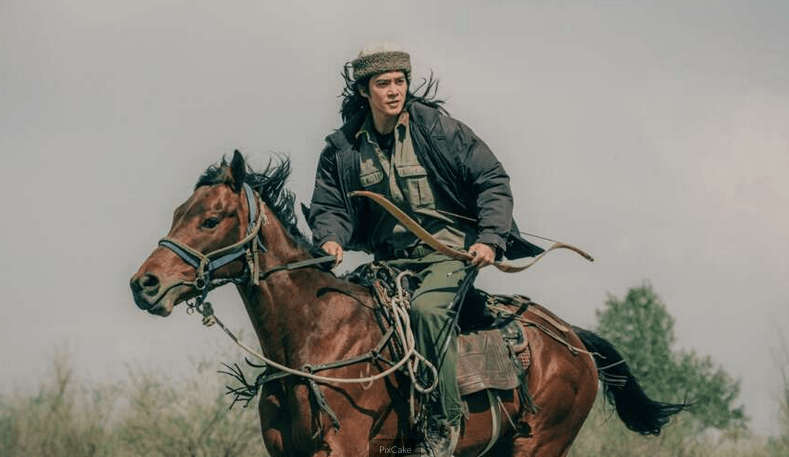
Guldana Salimjan, a Kazakh born and raised in China, reviews the popular Chinese TV mini-series “To the Wonder," (我的阿尔泰) literally "My Altai," inspired by Li Juan's writing: Ta-Nehisi Coates [Afro-American author] explains how literary works, public monuments, and eventually movies reinforced the pernicious myth of white supremacy and innocence in the long aftermath of the … Continue reading The Dream of Han Innocence & “Nomad Sedentarization” of Xinjiang’s Kazakhs
 Altaic Storytelling