

我国学者数十年来致力于少数民族民间故事、诗歌谣谚、宗教口诵经典等的收集翻译整理,出版了大量翻译作品,取得了举世瞩目的成就,但其中也存在着一些遗憾和失误,这就是忽略了对少数民族民间作品母语文本的记录,有相当多的翻译整理本没有母语原本,没有逐字逐句的直译。这样的直接后果是,丧失了作品多方面的 科学价值,而且由于没有母语的承载,这些文本也难以作为相关民族后代传承文化的文本来使用。此外,由于缺乏语音记录和直译,相关民族特有的文化、社会和宗 教概念难以在汉文文本中全面正确地反映。鉴于此,今后在搜集整理少数民族民间文学作品时,应保留用国际音标记录或用本民族文字书写的严谨客观的母语文本。 (杨福泉,纳西族学者,中国民族报)
Jusup Mamay, Manaschi: A Rehabilitated Rightist and his Turkic Epic
A while back I stumbled upon a short Chinese news item about a newly discovered handwritten manuscript of the Kyrgyz Epic of Manas (玛纳斯史诗). This centuries-old trilogy in verse recounts the exploits of the legendary hero Manas, and his son and grandson in their struggle to resist external enemies and unite the Kyrgyz people. Along … Continue reading Jusup Mamay, Manaschi: A Rehabilitated Rightist and his Turkic Epic
Soft Power Strategy: Where Does China Figure in Turkey’s Literary Translation Program?
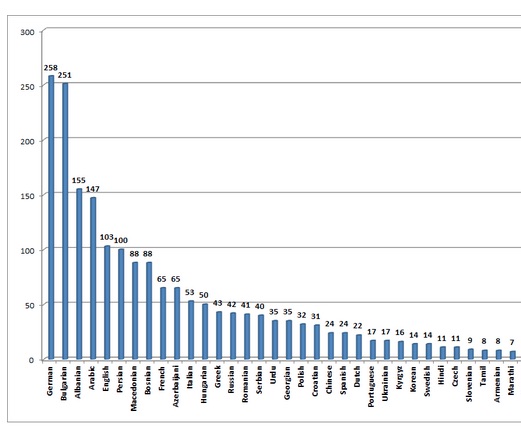
Over the last 11 years, Turkey has spent US$4.4m to fund translation and publication of fiction by Turkish authors via its TEDA grant program, according to Turkish Books, an article that appeared in the Hürriyet Daily on February 24, 2016. TEDA's own chart shows that just 24 titles appeared in Chinese as a result, compared … Continue reading Soft Power Strategy: Where Does China Figure in Turkey’s Literary Translation Program?
List: Modern China-based Evenki Authors & Their Published Works
* Under Construction * Modern China-based Evenki Authors & Their Published Works This list is based mainly on authors published in 2015 in 《新时期中国少数民族文学作品选集·鄂温克族卷》(lit, Selected Fiction by Ethnic Minority Writers in the New Period, Evenki Volume, at left), but I've added in many of their other published short stories and novels. All links are to … Continue reading List: Modern China-based Evenki Authors & Their Published Works
Excerpt of the Week: Zha Jianying on Ji Xianlin’s “The Cowshed”
Nearly 20 years after the appearance in China of one of the most shocking first-person narratives of the Cultural Revolution, The Cowshed: Memories of the Chinese Cultural Revolution (牛棚杂忆, 季羡林著), The New York Review of Books has published the book in English. Written by Ji Xianlin, the account appears with a new introduction by Zha Jianying … Continue reading Excerpt of the Week: Zha Jianying on Ji Xianlin’s “The Cowshed”
Ethnic ChinaLit: February 2016 Newsbriefs
Richard Bernstein reviews Perry Link's translation of physicist Fang Lizhi's autobiography, Most Wanted Man in China, and Ji Xianlin's The Cowshed. (Enemy of the State) International publishers, booksellers and free speech advocates have penned an open letter to HK head honcho Leung Chun-ying calling for him to defend HK's interests in the face of China's … Continue reading Ethnic ChinaLit: February 2016 Newsbriefs
Quick Guide to China’s Contemporary Ethnic-themed Literature in Translation
Updated: May 3, 2018 (No plans to further update) Quick Guide to China’s Contemporary Ethnic-themed Literature in Translation I’m often too busy to immediately write a well-researched post about contemporary “ethnic-themed” fiction that has been translated and published in a foreign tongue. This is a loose category (民族题材文学) that includes stories — regardless of the … Continue reading Quick Guide to China’s Contemporary Ethnic-themed Literature in Translation
Mapping Mongolian Music
In 蒙古音乐地图计划:如何面对外界错位的蒙古文化想象?Thepaper.cn reports on a young Chinese citizen of Mongolian heritage, Odon Tuya (敖登托雅) who has initiated her own “Mongolian Music Map Project” (蒙古音乐地图计划). Her aim: To document the current indie Mongolian music scene – including traditional musicians in places like Xinjiang – via published interviews and, eventually, to capture it on film. A writer … Continue reading Mapping Mongolian Music
Ethnic ChinaLit Roundup for end January 2016
Multilingual CASS scholar Adili Zhumaturdu (阿地力·朱玛吐尔地) reports that his 4-volume Chinese translation of the Kyrgyz epic, Manas (玛纳斯史诗), has made it onto the list of 86 books for "popularizing multi-ethnic traditional culture" (全国推荐中华优秀传统文化普及图书名单) recommended by China's very official State Administration of Radio, Film and Television. An ethnic Kyrgyz, he worked closely with Jusup Mamay, China's last … Continue reading Ethnic ChinaLit Roundup for end January 2016
“This is our Auschwitz”: Introduction to the “The Cowshed”
China: Surviving the Camps, adapted from Zha Jianying's introduction to The Cowshed: Memories of the Chinese Cultural Revolution, just launched in 2016: At the center of the book is the cowshed [牛棚], the popular term for makeshift detention centers that had sprung up in many Chinese cities at the time [of the Cultural Revolution]. This one was … Continue reading “This is our Auschwitz”: Introduction to the “The Cowshed”

