Trilingual Links to Writing by Xinjiang’s Liu Liangcheng (刘亮程)
Featured

Jun Liu and I have completed our translation of a novel, 凿空, by Liu Liangcheng, a Han author born and bred in the part of northwest China that borders on Central Asia. The novel’s working title is The Audible Annals of Abudan, but the Chinese title can be rendered as “Hollowed Out.” Ms. Yvonne Wang … Continue reading Trilingual Links to Writing by Xinjiang’s Liu Liangcheng (刘亮程)

The Audible Annals of Abudan: Chapter by chapter breakdown

The Audible Annals of Abudan Chapter-by-Chapter Outline (42 in total) Prologue Donkey’s Hee-haw Donkeys bray crimson, and their crimson bray has propped up the sky for Abudan in southern Xinjiang for centuries. When Zhang Jin comes home stone deaf from a mine, he finds the village smothered in police sirens. 1 Digging Two decades of … Continue reading The Audible Annals of Abudan: Chapter by chapter breakdown

Synopsis: “The Audible Annals of Abudan” (梗概:《凿空)

Synopsis: The Audible Annals of Abudan (Based on the Chinese novel by Liu Liangcheng) Within your lifetime, many things will disappear before your eyes. Only those you yearn for won’t arrive.                                                 … Continue reading Synopsis: “The Audible Annals of Abudan” (梗概:《凿空)

“Audible Annals” — Quick Takes

A novel with donkeys as heroes? Unlikely as it sounds, The Audible Annals of Abudan is a great read. Comic, but with very dark undertones, this is a satire about a side of China (or at least its far-western fringes) that will be unfamiliar to readers, and an eye-opener. The translation is lively and the narrative is … Continue reading “Audible Annals” — Quick Takes

Donkeys Bray Crimson

驴叫是红色的。全村的驴齐鸣时村子覆盖在声音的红色拱顶里。 驴叫把鸡鸣压在草垛下,把狗吠压在树荫下, 把人声和牛哞压在屋檐下。 Donkeys bray crimson. When donkeys cry in concert, a crimson vault of sound envelopes the village. It keeps the rooster’s crow under the haystacks, the dog’s bark under the trees, and the human voice under the eaves.   狗吠是黑色的,狗在夜里对月长吠, 声音飘忽悠远,仿佛月亮在叫。 羊咩是绿色的,在羊绵长的叫声里, 草木忍不住生发出翠绿嫩芽。 鸡鸣是白色的,鸡把天叫亮后, 便静悄悄了。   Dogs bark black. When a dog howls … Continue reading Donkeys Bray Crimson

Abudan’s Roza: The Stamp of Approval

Roza was the most honest, down-to-earth villager in Abudan, and he served as the village representative for most of his life. Whenever someone from the county or township came down to the village to conduct a survey, the village head would arrange for them to visit Roza’s home. Poorly spoken, he had just one response … Continue reading Abudan’s Roza: The Stamp of Approval

And this is a donkey we’re talking about

That was when the village distributed farm fields to each family by drawing lots. One day, Yüsup’s donkey was walking past Qurban when it farted right in his face. Qurban swung his ketmen and gouged the donkey’s back, leaving a deep gash. Yüsup was indignant.             “A donkey’s just an animal,” said Yüsup. “It doesn’t know … Continue reading And this is a donkey we’re talking about

Naming Abudan’s Villagers with a Turkic Touch

The Audible Annals of Abudan (凿空)  is set in an imaginary village in southern Xinjiang, which has historically been largely peopled by Uyghurs, a Turkic Muslim people. Although the word “Uyghur” never appears, it’s clear from several aspects of the tale, such as occasional transliterated vocabulary, that they speak a Turkic tongue.  It’s important to note … Continue reading Naming Abudan’s Villagers with a Turkic Touch

Author’s bio: Liu Liangcheng (刘亮程)

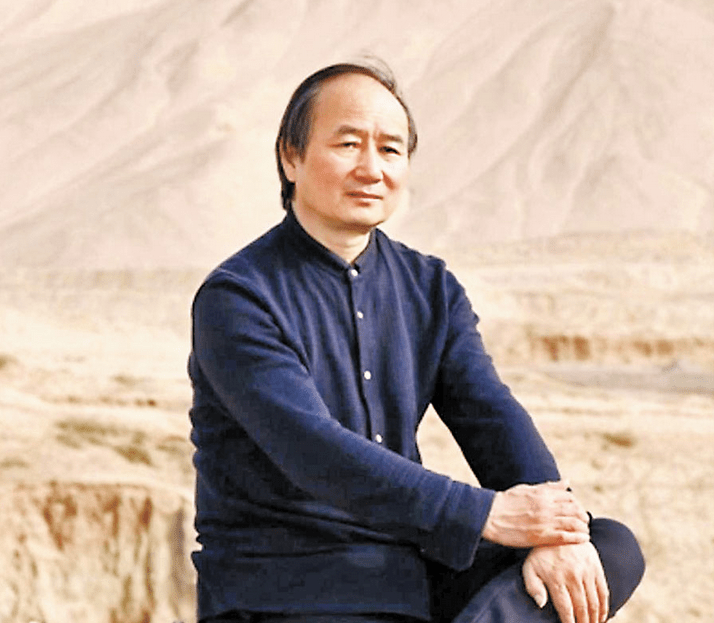
Dubbed “China’s Thoreau,” Liu Liangcheng has sold well over one million copies of One Man’s Village alone and won top literary awards with subsequent works. “We are living in a time of great change for humanity,” says Liu, “but I am interested in the things that remain unchanged in rural life.” The author began with … Continue reading Author’s bio: Liu Liangcheng (刘亮程)

Abudan’s Mazar

The significance --- and even the definition --- of 麻扎 (mazar) plays an important role in Abudan Village, as portrayed in Liu Liangcheng's novel, The Audible Annals of Abudan (《凿空》刘亮程 著). In its first appearance in the tale, the narrator briefly defines it in brackets: . . .一块棉花地和一片麻扎(墓地)。 Simply put, mazar = cemetery. But that equivalency … Continue reading Abudan’s Mazar