
Professor Mark Bender has brought to my attention the recent launch of the 422-page A World of Chinese Literature, which contains his short but fascinating article entitled Yi Literature: Traditional and Contemporary. It is an introduction to the "history, content and transmission of traditional and contemporary Yi traditions of written and performed literature." The Yi … Continue reading The Yi (彝族) of Southwest China: Transmission of their Written and Performed Literature, Old and New
Category: Book Reviews (书评)
Grassland logic, Agrilogistics and Hanspace Cosmologies — Robin Visser’s Disruptive “Questioning Borders”
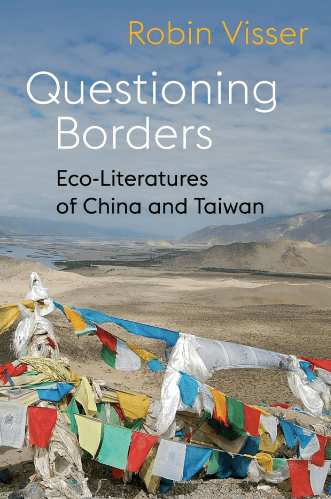
Newly published Questioning Borders: Eco-Literatures of China and Taiwan by Robin Visser makes for fascinating reading, and it: . . . features works by Mongol, Tibetan, Taiwanese, Tao, Bunun, Yi, Bai, Kazakh, Uyghur, and Han writers set in rapidly transforming ecologies in Xinjiang, the Tibetan Plateau, Inner Mongolia, Southwest China, and Taiwan. Authors whose works are cited in detail … Continue reading Grassland logic, Agrilogistics and Hanspace Cosmologies — Robin Visser’s Disruptive “Questioning Borders”
“Backstreets,” the Novel: The Brutal Life of a Uyghur Man in Xinjiang’s Ürümchi
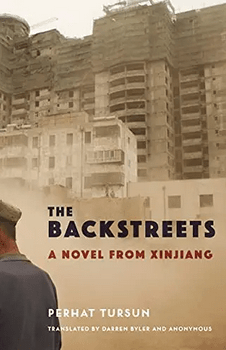
In Xinjiang Has Produced Its James Joyce, Ed Park reviews the first contemporary Uyghur-language novel to appear in English translation, by an author --- Perhat Tursun (پەرھات تۇرسۇن) --- now languishing in the Xinjiang Gulag: If his [the protagonist's] rural Uyghur upbringing was harsh, his life as a Uyghur man in Ürümchi can be downright brutal. … Continue reading “Backstreets,” the Novel: The Brutal Life of a Uyghur Man in Xinjiang’s Ürümchi
Book Review of “The War on the Uyghurs”: How a People Became “Terrified”
An excerpt from Darren Byler’s review of Sean Roberts’ The War on the Uyghurs: Prior to the US declaration of the Global War on Terror, Uyghurs were described occasionally as “counterrevolutionaries” or as “separatists”, but never as terrorists. Working in concert with Chinese state security in a Beijing-based investigation, in the early 2000s US intelligence officials took up … Continue reading Book Review of “The War on the Uyghurs”: How a People Became “Terrified”
“The Devils’ Dance”: Review of Uzbek author Hamid Ismailov’s Novel
From childhood, it was drilled into our minds together with our mother tongue: if you start an idea, take it to the finish line ! This is because the Uzbek language’s structure is such that until you get to the end of a verbal phrase, in order not to miss the meaning of the verb, … Continue reading “The Devils’ Dance”: Review of Uzbek author Hamid Ismailov’s Novel
“Old Demons, New Deities”: Review of Collection of 21 Contemporary Tibetan Short Stories
In Off the Plateau, Lowell Cook reviews a new collection of 21 short stories penned in Tibetan, Chinese and English by Tibetan writers inside and outside the inauspiciously dubbed "TAR" --- the Tibetan Administrative Region in the PRC. Some of the stories "evoke how Tibet is not bound by a single language or region, and also … Continue reading “Old Demons, New Deities”: Review of Collection of 21 Contemporary Tibetan Short Stories
Excerpt of the Week: Zha Jianying on Ji Xianlin’s “The Cowshed”
Nearly 20 years after the appearance in China of one of the most shocking first-person narratives of the Cultural Revolution, The Cowshed: Memories of the Chinese Cultural Revolution (牛棚杂忆, 季羡林著), The New York Review of Books has published the book in English. Written by Ji Xianlin, the account appears with a new introduction by Zha Jianying … Continue reading Excerpt of the Week: Zha Jianying on Ji Xianlin’s “The Cowshed”
“Last Quarter of the Moon”: Readers Speak Out
An admittedly quirky collection — selected by me — of unedited online reviews of my translation of Chi Zijian's 额尔古纳河右岸 (Last Quarter of the Moon). Not to worry. They aren't all glowing recommendations. . . * * * Beautifully written, but depressing as fuck. (full text) * * * It is an atmospheric modern folk-tale, … Continue reading “Last Quarter of the Moon”: Readers Speak Out
“Shanghai Baby” and “Candy”: Back When Young Female Chinese Writers “Wrote with their Bodies”
Just finished translating a new semi-autobiographical novella (synopsis), The Embassy's China Bride (大使先生), by Jiu Dan of Crows fame (乌鸦, 九丹著). This reminded me that at the turn of 21st century, three young Chinese female writers were busy boldly writing about their sexuality, orgasms and all, and being lambasted for it by the critics and … Continue reading “Shanghai Baby” and “Candy”: Back When Young Female Chinese Writers “Wrote with their Bodies”
Chinese Muslim’s Pilgrimage to al-Andalus
Zhang Chengzhi (张承志), the white-hot Red Guard who mastered Mongolian and Japanese—and then converted to Islam—has written En las Ruinas de la Flor: Viajes por al-Andalus (鲜花的废墟). His Chinese-language travelogue takes us through Moorish Spain, Portugal and Morocco in search of the golden age of Islam in Europe (8th-15th centuries). Freshly Flowering Ruins: Travels in al-Andalus … Continue reading Chinese Muslim’s Pilgrimage to al-Andalus
 Ethnic ChinaLit