

Victor H Mair, professor of Chinese at the University of Pennsylvania, died in late June this year (2026). He politely answered my occasional email, encouraged my studies of Turkish, and, although I never mentioned it to him, was a role model to me because of his bold, multidisciplinary approach to “sinology.”
At various times in his career, he mastered modern and classical Chinese, studied Sanskrit and classical Tibetan, and possessed a working knowledge of Turkic languages such as Chagatai.
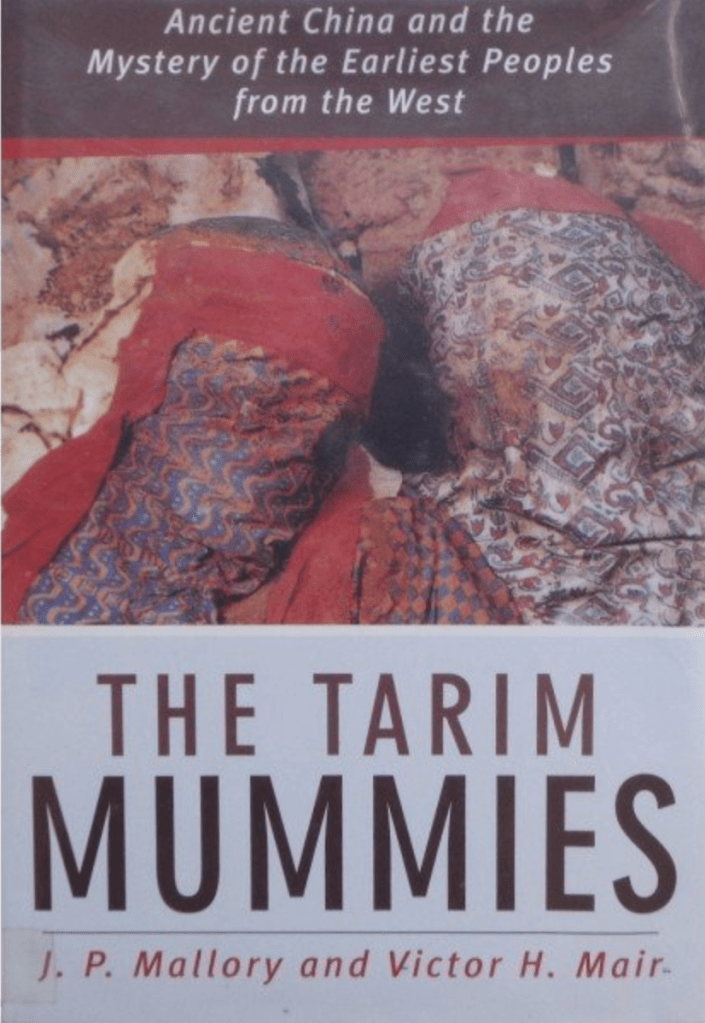
He co-authored The Tarim Mummies: Ancient China and the Mystery of the Earliest Peoples from the West, and edited books such as the Columbia History of Chinese Literature, Reconfiguring the Silk Road, and The Bronze Age and Early Iron Age Peoples of Eastern Central Asia.
In fact, his work broadly encompassed Silk Road studies, Sino-Indian and Sino-Iranian cultural relations, and the linguistic history of the Tarim Basin.
At this time, when China has newly promulgated the Law on Promoting Ethnic Unity and Progress that mandates the assimilation of its 55 recognized ethnic minorities into a single “shared” Chinese national identity, it is more important than ever that scholars – within and without China – work to promote research into China’s multiethnic origins and interaction with the outside world. And this requires mastering key languages such as Manchu, Mongolian, Tibetan, various Turkophone tongues, Russian and Persian.
Fans of Mair may enjoy this look at how his contributions were at times airbrushed by the mainstream China press: Xinjiang’s Awkward Not-so-Chinese Mummies.
*** If you’d like to view comments or leave one of your own, please scroll down. It may not appear immediately, as my system requires that I “approve” it. If you’d like your name to appear, add at the end, otherwise it will likely be labeled “anonymous.” Critical comments are welcome; just keep it polite.


Shocked to get the news of Victor’s passing. The years have passed so fast.
Stuart Sargent, France
LikeLike
So sad too soon ..Loved Victor’s discoveries on the beautiful preserved Tarim mommies and the Tokharian people that were not Chinese. It was most difficult for him to get the real science out of communist china.Hopefully his early departure wasn’t because of Penn’s archaic mandates.
LikeLike