
I recently completed two co-translation projects touching on what was known in ancient China as the remote “Western Regions” – Xinjiang and Central Asia, basically. < 漫游草原丝路>, a travelogue by H.K Chang, has now appeared in English as Roaming the Steppe Silk Road, and Jun Liu’s and my rendition of Liu Liangcheng’s < 凿空>, a novel set in a Southern Xinjiang Uyghur village in the early 21st century, is now being edited for publication in English, hopefully within 2026. You can find the synopsis here.
So I’ve begun working on another contemporary novel, this time set in Inner Mongolia, penned by an ethnic Mongolian author, 郭雪波 (Guo Xuebo), who writes in Chinese. See here for the synopsis, or an excerpt.
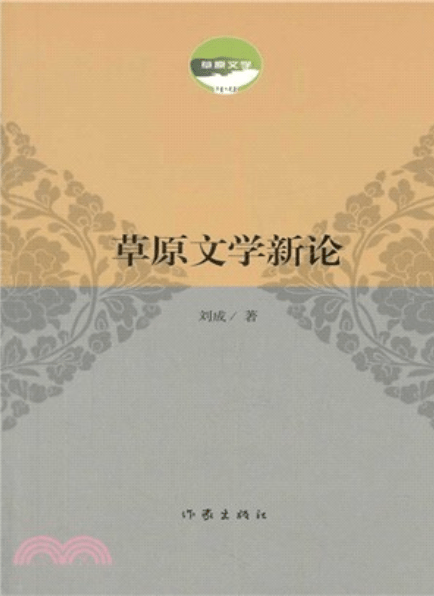
As part of my research, I’ve been reading < 草原文学新论 > (New Perspectives on Steppe Literature) by 刘成 (Liu Cheng), a PRC-based Mongolian expert on “China’s steppe literature.” Since it’s a new genre for me – and may be for some of my blog visitors too – below I’ve paraphrased some key parts of his chapter on what makes China’s steppe fiction distinctive (草原文学的独特性). I realize some of the wording is a bit awkward, and this is certainly due to my still rough draft – not Liu Cheng’s Chinese prose!
*** Material and Spiritual Dimensions of Steppe Literature ***
关键词:游牧、英雄精神、阳刚、粗旷、
豪爽、崇尚自然、人与自然共生共存
Steppe literature fundamentally draws its material from Nature, Animals (initially wild, later domesticated), and the Herder. Via the relationships between these three elements, it reflects’s the herder’s existential aspirations and aesthetic ideals.
Heroic spirt and rugged strength constitute the inner spirit and aesthetic orientation of steppe literature,. Over the centuries, the harsh natural environment and unsettled nomadic way of life led the northern steppe peoples to cultivate an optimistic mindset marked by valor, forthrightness and fortitude, and these characteristics are amply reflected in the literature.
Revering Nature and the free and perfect unity between humans and nature constitute the highest aesthetic pursuit of steppe literature. Steppe culture, in its essence, differs from the culture of the Central Plains agrarian peoples and that of the industrialized West. Rather, it is an ecological culture based on the nomadic mode of production. Steppe culture neither emphasizes humans while slighting nature, as Confucian culture tends to do, nor posits an absolute opposition between humans and nature with the aim of dominating the latter, as the West’s conquest-oriented culture does. Rather, it respects Nature, reveres Nature, and emphasizes the symbiotic coexistence of humans and Nature.
*** Expressive Techniques of Steppe Literature ***
关键词:抒情、韵文、萨满神歌、阿尔泰语系、
自然万物人格化、兽类型比、神话传说,英雄史诗、神幻浪漫
The primary expressive technique of Steppe literature is lyricism. Steppe literary works often possess a strong lyrical quality, with unrestrained emotion and a rich poetic flavor. Over the centuries, the Steppe peoples created a lyrical tradition that began with shamanic ritual chants, and evolved into literary forms such as ritual blessings, proverbs and odes.
Mingling of verse and prose is a key expressive technique of Steppe literature. From ancient songs, poems, and proverbs to modern poetry, these verse forms, which excel at expressing passion, are particularly well-developed. This is closely related to the production and lifestyle of Steppe peoples, their modes of thinking, and the linguistic characteristics of the Altaic language family. Beginning with The Secret History of the Mongols, a literary tradition of alternating verse and prose was established, a tradition that continued all the way up to modern narrative folk songs.
Mythic romanticism is also a creative method employed in steppe literature. Steppe literature, especially heroic epics, generally employs mythic romanticism as its primary approach, using archetypal character types, as well as a combination of dynamic and static elements featuring embellished and meticulous description, to narrate heroic sagas. The structural composition of heroic epics typically consists of three parts: a prologue, the main body, and an epilogue.
Personification of Nature and “Bestial Metaphors”: In the view of herders, animals are also full of emotion; as long as one can move them emotionally, animals can develop compassion and show mercy. For the steppe peoples on horseback, from the smallest details of daily life to the great undertaking of founding a nation, almost everything was accomplished on horseback. In contemporary steppe novels, not only are plants and animals personified, but even originally inanimate entities like deserts are also personified.
So-called “bestial metaphors” refer to an artistic method in steppe literature for shaping characters by using fierce birds and beasts to represent human qualities. This approach has been an aesthetic presence in steppe culture from ancient myths and legends, heroic epics, and fables, all the way to modern and contemporary literature. As early as ancient myths and legends, particularly in totemic myths, the embryonic form of this expressive technique had already emerged.
(To leave a comment or view those of others, pls scroll down. If it doesn’t appear immediately, not to worry; sometimes I have to approve first. Critical comments are welcome. If you want your name to show, note it; for some reason, my WordPress site tends to categorize you are “anonymous”)
 Altaic Storytelling
Many thanks, Bruce, for this introduction to steppe literature.
mark selden
LikeLike
Thx for the encouragement, Mark.
Of course, like so much of academic discourse in the Middle Kingdom, Professor Liu’s “new perspectives” are centered on steppe writing originating within the PRC, even though he labels it as 草原文学, i.e., “grasslands” or “steppe” literature, and he maintains that for the most part, it is synonymous with writing by Mongolian authors.
What about “The Stories of the Great Steppe: The Anthology of Modern Kazakh Literature”, edited by Dr. Rafis Abazov, an adjunct professor at Columbia University?
Meanwhile, I just finished “Steppe” by Oksana Vasyakina. The narrator is a “queer literature student traveling across Russia with her estranged father, a long haul truck driver secretly dying of AIDS.” That’s a radically different, 21st-century Russian take on the steppe . . .
LikeLike
What nomadic peoples revere and celebrate are often seen by agrarian (and industrial) peoples as primitive superstitions. I hope to learn more of what 郭雪坡 has to say.
LikeLike