
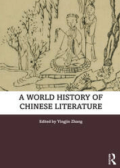
Professor Mark Bender has brought to my attention the recent launch of the 422-page A World of Chinese Literature, which contains his short but fascinating article entitled Yi Literature: Traditional and Contemporary. It is an introduction to the “history, content and transmission of traditional and contemporary Yi traditions of written and performed literature.”
 The Yi people (彝族) of southwest China number around 9 million, and speak a language that is part of the Tibeto-Burman family of languages that are widely spoken in southwest China, Myanmar, northeast India, and other parts of the Himalayas.
Only a handful of non-Han peoples in China possess what he terms “fully workable” writing systems, mainly the Tibetans, Uyghurs, Kazakhs, Mongolians, Manchu, Korean, Dai and the Yi. The Naxi and Shui employ “less-versatile scripts” used mostly in rituals and divination, and there exist bodies of writing in the epic and ritual literature of the Zhuang, Yao, Dong, Bai that use versions of Chinese characters (often for their sound value).
According to Bender, the most widely circulated works of traditional Yi literature are epics and narrative poems collected in the 1950s and 1960s and published in Chinese translation. They included Meige: Yi Epic (梅葛: 彝族史诗), the status of which Matthew Walsh documented in a Yunnan village — including a video complete with song — back in 2017 (Under Threat).

Bender also details the backstory to the Origins of the Yi, which has come down to us thanks to a bimo (毕摩) who stashed one version of it in a cave during the chaotic Cultural Revolution. This reminds me of a similar tale about a hand-copied version of the Kyrgyz Epic of Manas, that was also buried during the Cultural Revolution to save it from destruction by over-zealous Red Guards, and not unearthed until 2014.
Grasping the real significance of centuries-old oral literature that has been textualized — and translated in the process — is no easy task. Bender reminds us:
The pastiche of genealogies and sketches of origin stories [such as “Origins of the Yi”] — all in verse — are difficult to link together without the understanding that the assemblage is not made to be read but rather performed in ritual contexts. In fact, many of the texts seem to assume the primary listener is the soul of the dead being guided to the land of the ancestors. The lyrics may provide a sort of comfort by giving rationale for the inevitability of death, often using images from nature. Fieldwork reveals that bimo regularly recite the origins of local clans along with origins of the sky, earth, and its inhabitants as part of funerals, weddings, rituals for casting out negative forces, the recalling of wandering souls of children, etc.
(***To leave a comment or read previous ones, please scroll down)
 Ethnic ChinaLit